Academic Work

Research & Publications

"Mathematics is not about numbers, equations, computations, or algorithms: it is about understanding."— William Paul Thurston
"The goal is to turn data into information, and information into insight."— Carly Fiorina

In most of my research, I worked extensively with mathematics, focusing on model predictive control, an approach that brings optimization and prediction together for decision-making in dynamic systems.

Beyond control theory, I also developed substantial experience in machine learning, using data-driven methods to improve system modeling, prediction, and classification.

I have around one year of postdoctoral research experience, supported by UK Research and Innovation (UKRI) and the Royal Society of Engineering.

Research background

Representative Publications

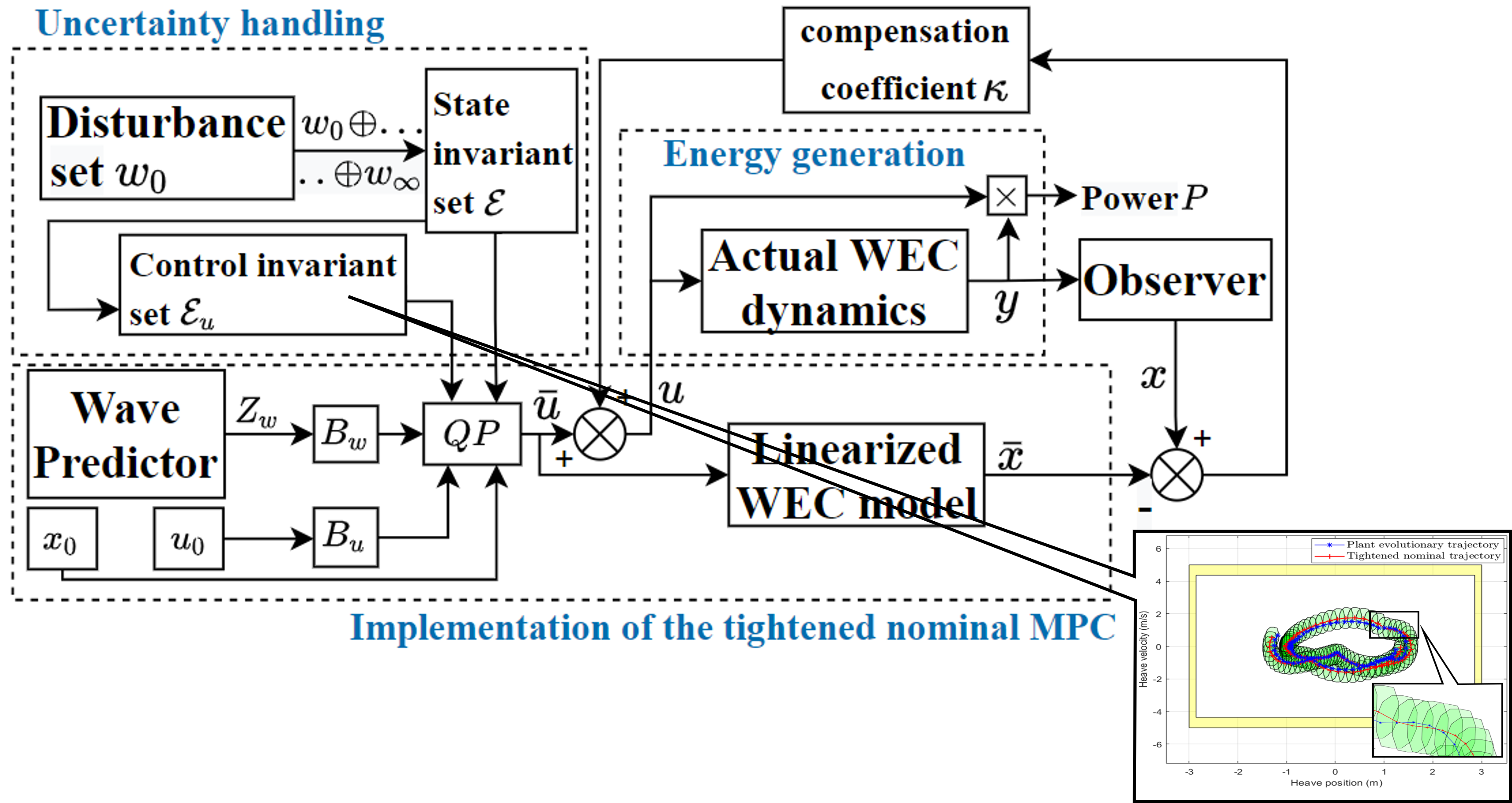
Robust tube-based model predictive control for wave energy converters
IEEE Transactions on Sustainable Energy · 2022

Robust tube-based model predictive control for wave energy converters

Yujia Zhang et al.

Developed a robust tube-based Model Predictive Control (RTMPC) strategy for energy maximization in Wave Energy Converters (WECs), addressing constraints and model uncertainties.

Methodology

Integrated disturbance invariant sets into the MPC framework to explicitly handle uncertainties and ensure robustness without increasing computational complexity.
Robust nonlinear model predictive control of an autonomous launch and recovery system
IEEE Transactions on Control Systems Technology · 2023

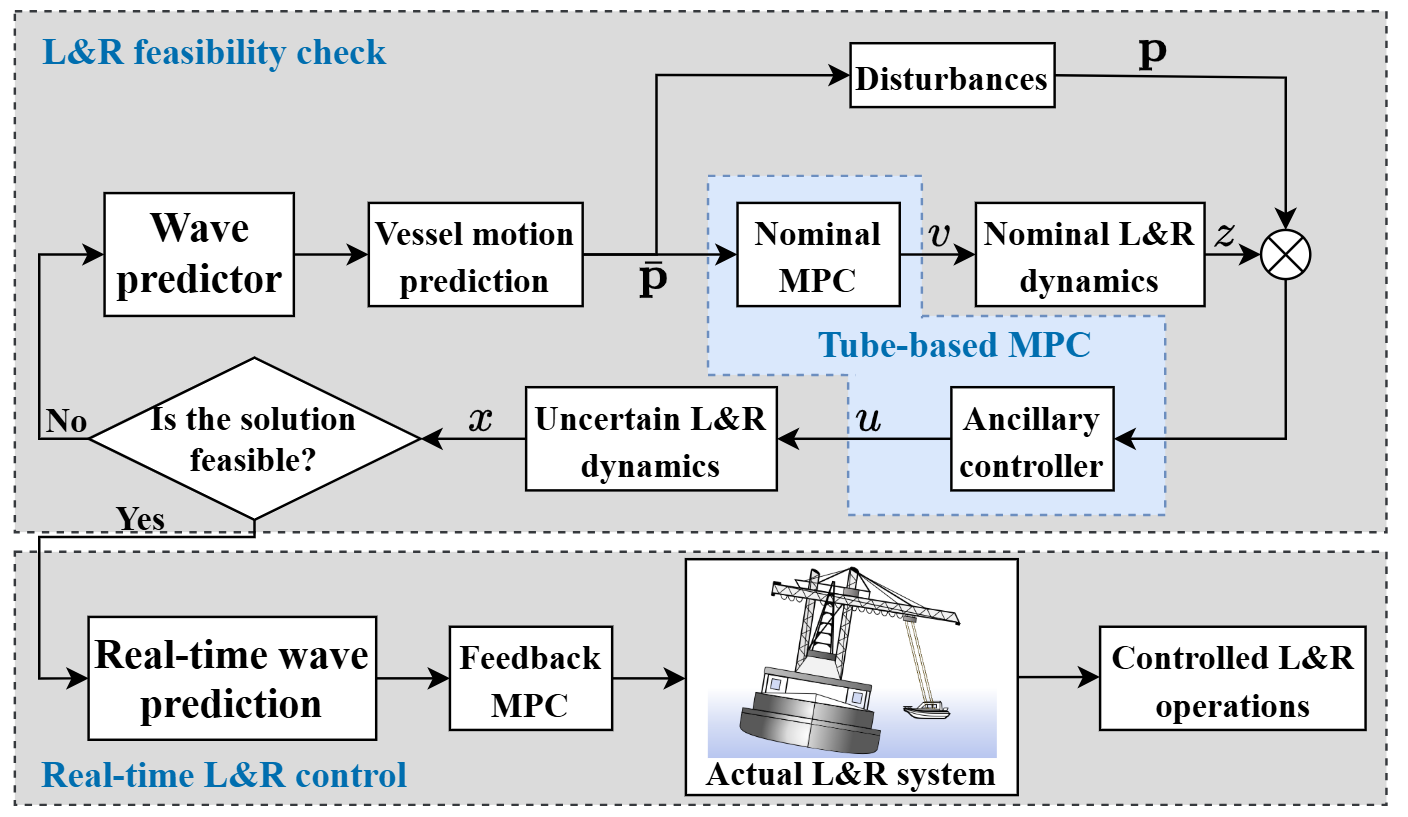
Robust nonlinear model predictive control of an autonomous launch and recovery system

Yujia Zhang et al.

Developed an autonomous optimization-based control system for lifeboat launch and recovery in high sea states.

Methodology

Adopted Tube-based Model Predictive Control (TMPC) to assess risk and optimize control. Model uncertainties and constraints are incorporated to ensure robust performance despite inaccurate environmental disturbance predictions.

Robust Learning-based Model Predictive Control for Wave Energy Converters
IEEE Transactions on Sustainable Energy · 2024

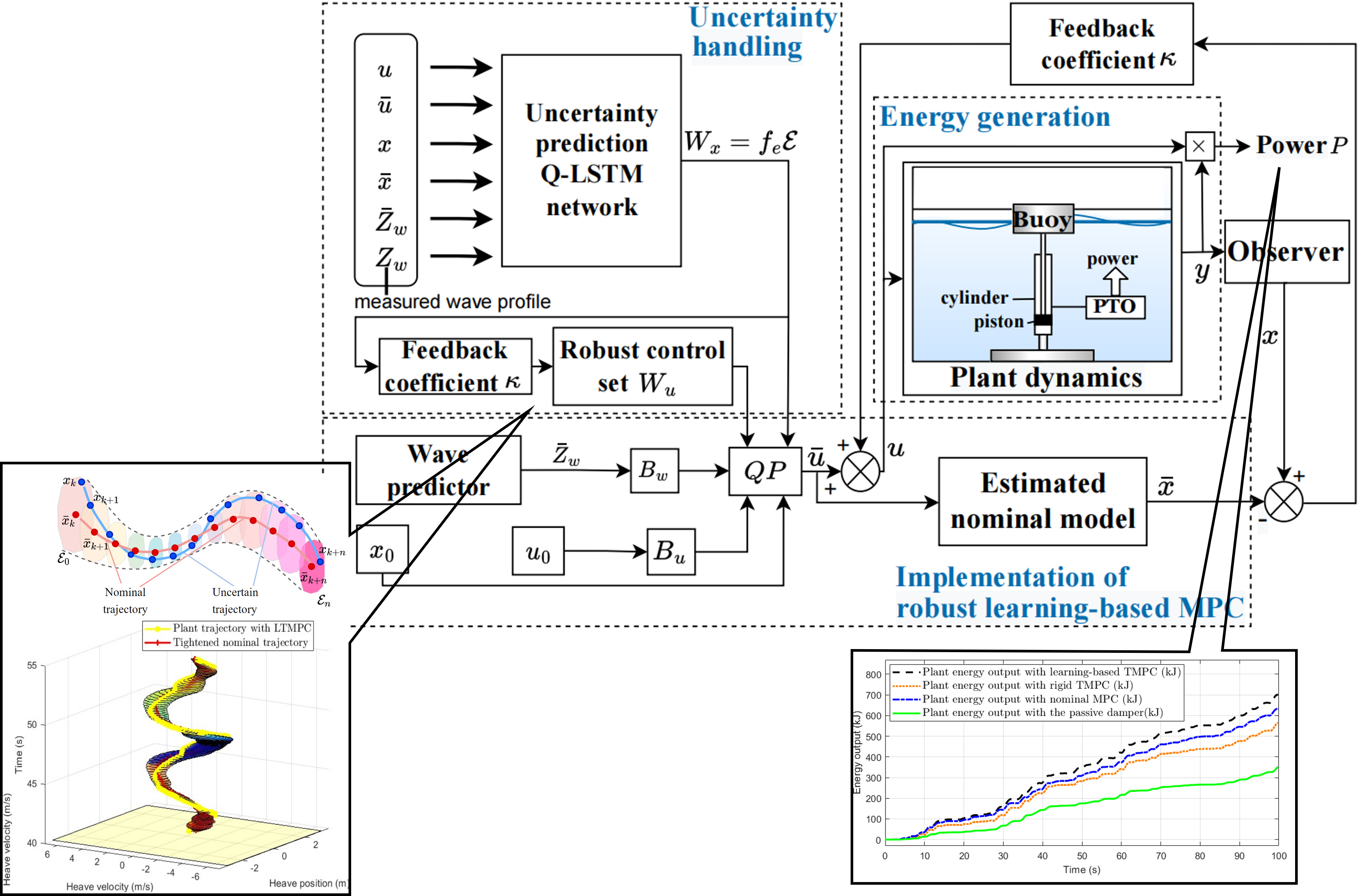
Robust Learning-based Model Predictive Control for Wave Energy Converters

Yujia Zhang et al.

Developed a machine learning based MPC strategy for WECs to balance the objectives of maximizing energy extraction and ensuring safety.

Methodology

Used machine learning to dynamically adjust uncertainty sets in MPC. Adopted a quantile-regression-based LSTM network to predict and optimize uncertainty bounds in real-time.

Machine Learning Research

ML remote sensingML remote sensing results
2019 · Remote Sensing

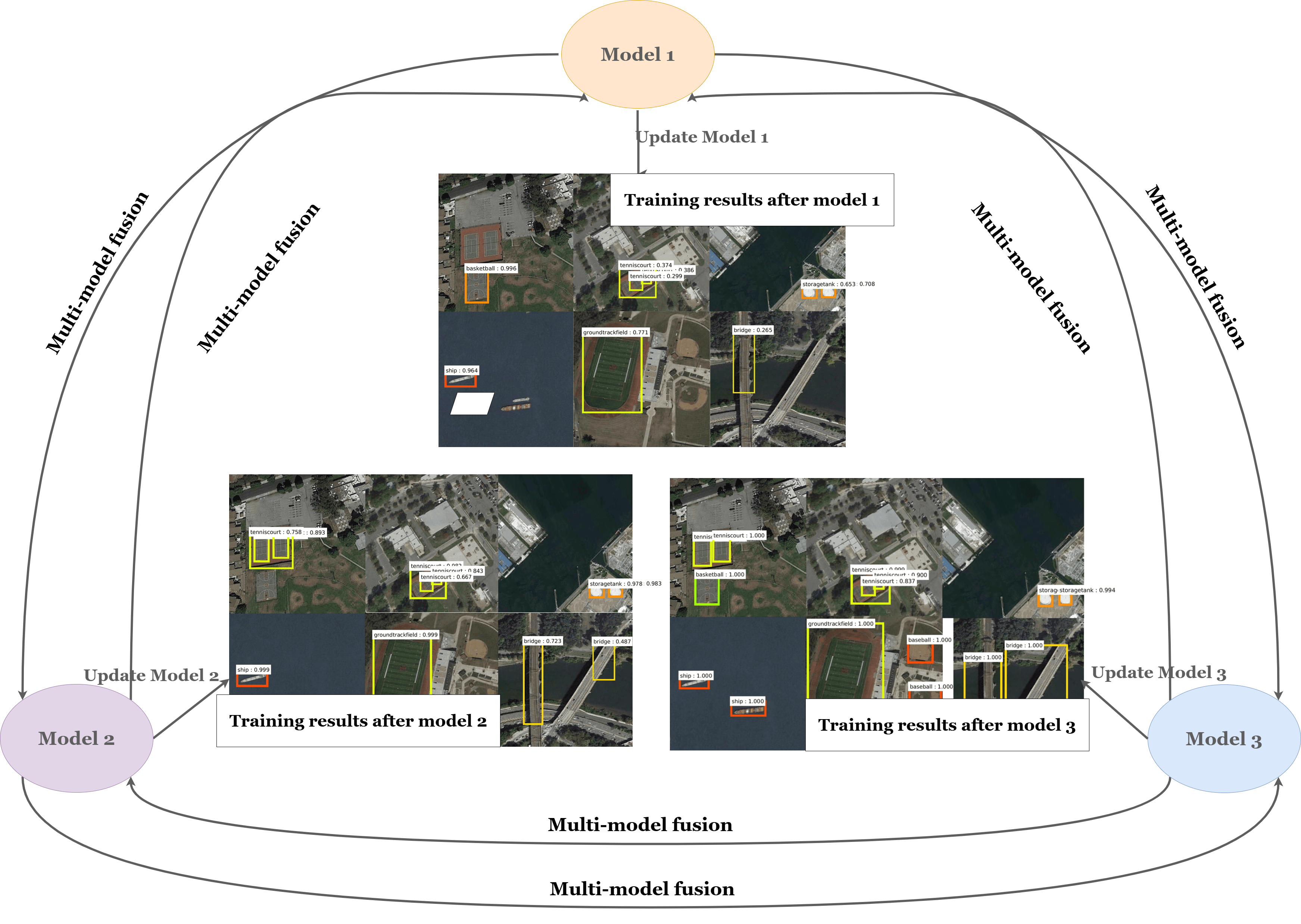
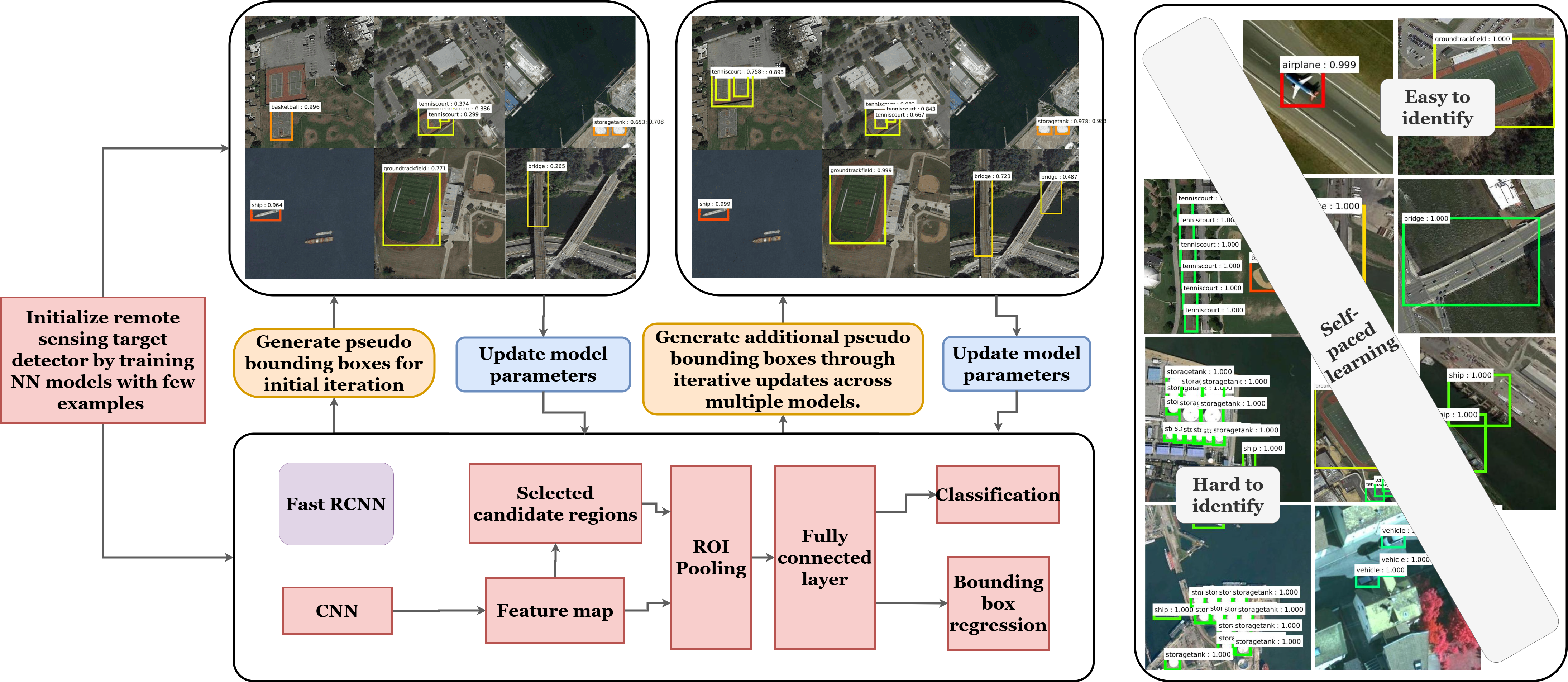
Multi-Model Fusion for Remote Sensing Object Detection

This work improved object detection in remote sensing imagery, where targets are often small, dense, and difficult to localize consistently across large aerial scenes.

Objective: Improve remote sensing object detection through multi-model fusion, with a focus on more reliable localization and classification under challenging image conditions.

Multi-Model Fusion: Combines Fast R-CNN & R-FCN to improve accuracy by leveraging the complementary strengths of both detectors. The framework uses minimal bounding-box information for initialization and refinement, supporting more stable proposals and stronger final localization.

Self-Paced Learning: Training progressed from easier, higher-confidence samples to more ambiguous cases, improving stability and generalization.

Impact: The pipeline improved robustness across scale variation, cluttered backgrounds, and sparse visual cues in geospatial vision tasks.